How to Build a DevOps Services Plan
Prioritize DevOps work by delivery risk, ownership, observability, and measurable outcomes.
May 31, 2026
DevOps Engineering

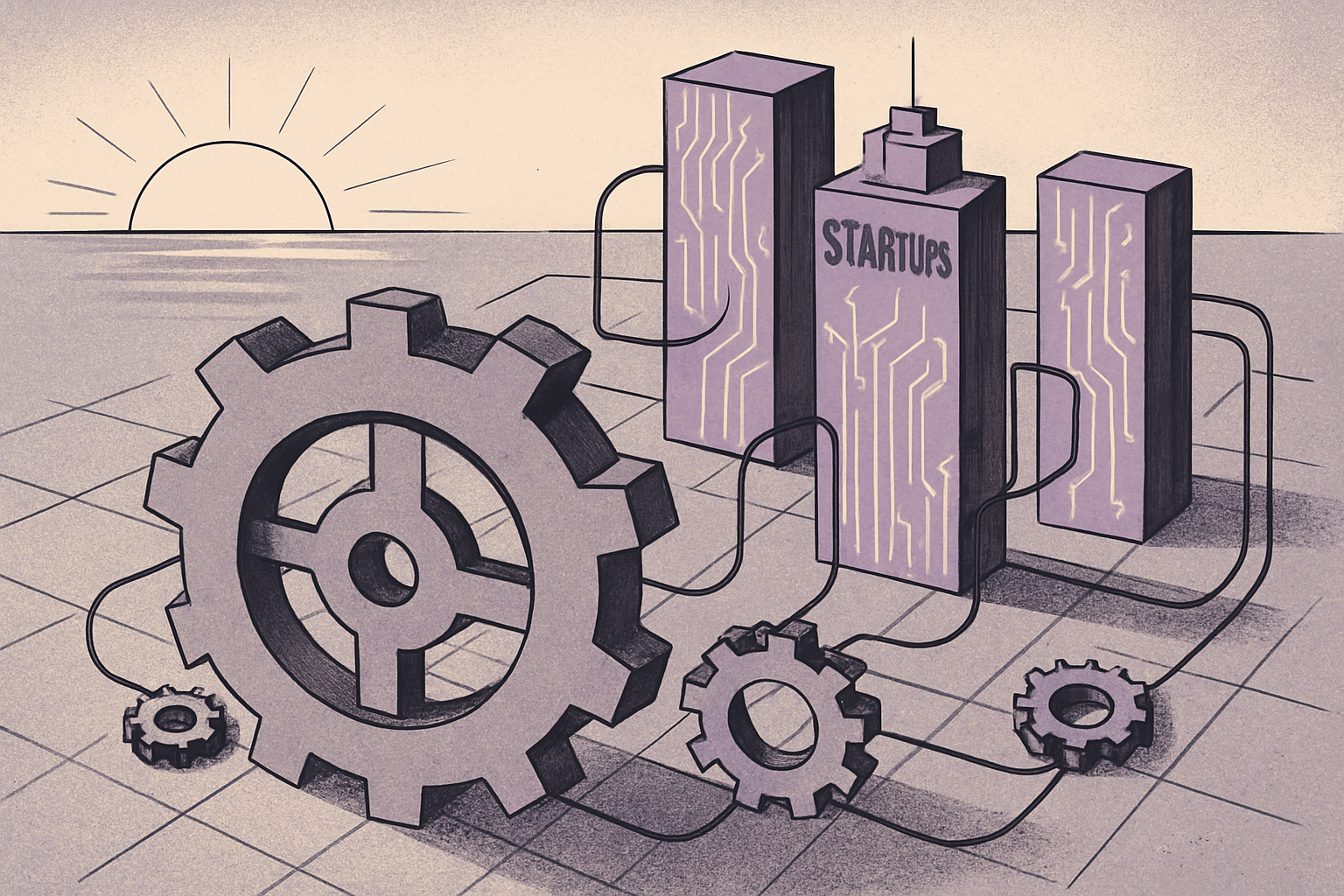
Shape startup DevOps around IaC, CI/CD, observability, ownership, and incident response.


Startup teams usually feel DevOps pressure when production starts slowing product work. Deployments become fragile, debugging takes too long, cloud changes live in someone’s console history, and the founder still gets paged for every outage. The pressure is real, but the answer is rarely “hire a DevOps team immediately” or “move everything to Kubernetes.”
The better move is to design the smallest operating model that keeps delivery safe, repeatable, and clearly owned. For a startup, DevOps should reduce friction for engineers while protecting production. If it becomes a ticket queue, a pile of YAML, or one person’s undocumented magic, it will slow you down.
Many startups make the same mistake: they try to solve DevOps by assigning it to one person. Sometimes that person is a founding engineer. Sometimes it is the backend lead. Sometimes it becomes the first “DevOps hire.” This can work for a short time, but it creates a production bottleneck if every deploy, cloud change, and incident depends on one person.
Before you hire, define how production ownership should work:
At a seed-stage company, this may be one engineer with a few written standards. At a Series B company, it may be a dedicated platform team. The structure can change, but the responsibilities need to exist early.
If you are trying to decide whether to keep DevOps ownership inside product engineering or create a separate platform function, this guide on how to build a DevOps team gives a useful way to think about roles, timing, and ownership.
A startup does not need a perfect platform on day one. It does need a baseline that prevents avoidable production risk. The goal is to make the common path safe: create infrastructure, deploy code, observe behavior, and recover when something breaks.
Your first production baseline should usually include:
The biggest failure mode here is having no IaC because the team is “moving fast.” Manual console changes feel faster until you need to recreate an environment, review a security change, or understand why production differs from staging. A small Terraform module with clear ownership beats a complex setup that nobody trusts.
You also need to be honest about Kubernetes. Kubernetes can be the right choice when you need workload portability, custom scheduling, multi-service orchestration, or strong deployment primitives. It is often the wrong first move for a team with one service, no platform owner, and limited operational time. Managed containers, serverless, or a platform as a service can be the better bridge while the product is still changing quickly.
Continuous integration and continuous delivery, usually shortened to CI/CD, should make shipping safer without adding ceremony. For most startups, the first goal is simple: every code change should pass automated checks, produce a deployable artifact, and move through environments in a predictable way.
A practical startup pipeline looks like this:
Teams often get into trouble when CI/CD becomes a fragile script collection. A pipeline that only one engineer understands is technical debt with a progress bar. Keep the workflow readable. Put deployment logic in version control. Make environment differences explicit. Document the parts that can fail.
Good deployment design also depends on your application. A stateless API can usually roll out with a simple rolling deployment. A system with database migrations, background jobs, and event consumers needs more care. For example, if a migration removes a column while old workers still read it, a clean deploy pipeline will not save you. You need backward-compatible release patterns, migration order, and rollback rules.
Tool choice matters, but it should follow your operating needs. GitHub Actions, GitLab CI, CircleCI, Buildkite, Argo CD, Flux, and cloud-native deployment tools can all work. The better question is whether your team can maintain the system under pressure. If you are comparing options, this guide on choosing the right DevOps tools covers the tradeoffs more directly.
Observability is often delayed until the first serious outage. By then, the team is reading raw logs, guessing which deploy caused the issue, and asking customers for screenshots. That is an expensive way to debug production.
At minimum, you need three things:
Do not start by alerting on everything. Start with user impact and production health. A useful first alert set might include:
Every alert should have an owner, a severity level, and a response path. If an alert wakes someone up, it should point to a runbook or dashboard. If nobody acts on an alert, delete it or change it. Alert fatigue is usually a sign that the team optimized for coverage instead of signal.
Incident response does not need to be heavy. A startup can start with a simple flow:
Keep post-incident reviews practical. Avoid blame, but do not avoid accountability. If the root issue was no rollback path, unclear ownership, or missing dashboards, write that down and fix it. Production gets better when incidents change the system, not when they only create longer meetings.
Most startup DevOps problems are predictable. They usually come from solving tomorrow’s scale before today’s reliability, or ignoring production basics until they block delivery.
A dedicated DevOps or site reliability engineering hire can help, but hiring too early can hide a weak ownership model. If product engineers throw infrastructure requests over a wall, the new hire becomes a ticket queue. That slows releases and creates resentment.
Before hiring, ask:
Kubernetes can be useful, but it adds operational weight. Clusters need upgrades, networking, ingress, secrets, autoscaling, workload policies, observability, and security controls. Managed Kubernetes reduces some work, but it does not remove platform ownership.
If your team has one or two services, low traffic, and no dedicated infrastructure owner, start simpler. If you already run Kubernetes and it is causing pain, reduce custom choices before adding more tooling.
Manual cloud changes create drift. Drift creates fear. Fear slows deploys and makes incidents harder to resolve. If your team already has manual infrastructure, do not try to convert everything in one sprint. Start with the resources that change often or carry the most risk: networking, databases, compute, permissions, and deployment configuration.
If every environment variable change, deploy, or dashboard request requires a ticket to one person, you do not have a delivery system. You have a bottleneck. Build paved paths instead: templates, modules, service scaffolds, pipeline patterns, and clear docs that let engineers do safe work without waiting.
It is normal for founders to own production early. It becomes risky when they remain the only people who know how to restart services, rotate secrets, approve deploys, or respond to incidents. Move production knowledge into the team before it becomes a hiring, sleep, or customer trust problem.
If you are unsure which of these issues is causing the most drag, a focused DevOps audit can help you identify the highest-risk gaps before you commit to a larger platform project.
The right implementation path depends on where your startup is today. A team leaving Heroku, Render, Railway, or Fly will have different needs than a team already running Terraform and Kubernetes. Still, the order of operations is usually similar.
If you need help turning a fragile setup into a production-ready baseline, a targeted DevOps setup consultation can be a practical next step. Use it to clarify priorities, not to buy a pile of tools you may not need.
DevOps at a startup should make production safer and engineering faster without creating unnecessary process. Start with ownership, IaC, CI/CD, observability, and incident response. Keep the platform boring where you can. Add complexity only when the product, team, or customer requirements make it worth the cost.
If founders still own every outage, deploys feel risky, or cloud changes are undocumented, fix those basics first. The best startup DevOps setup is the one your team can understand, operate, and improve while still shipping the product.